

The Quiet Power of Flowers: Why Botanical Art Makes Homes Feel More Human
A beautifully designed room is not always a memorable one.
We've all experienced spaces that are technically perfect. The furniture is carefully chosen, the colour palette is balanced, and every decorative object seems intentionally placed. Yet despite all that effort, something feels missing. The room may look impressive, but it doesn't necessarily feel inviting.
By contrast, some spaces create an immediate sense of comfort. They encourage people to stay a little longer, relax a little more, and feel more connected to their surroundings. Often, the difference has less to do with design trends and more to do with the presence of natural elements.
Flowers have a remarkable ability to create this effect.
For centuries, people have brought flowers into their homes not because they serve a practical purpose, but because they enrich everyday life. They introduce softness into structured environments, warmth into formal spaces, and a sense of life into rooms that might otherwise feel static. Today, botanical artwork continues that tradition, offering a lasting connection to nature within modern interiors.
This enduring relationship raises an interesting question: why do flowers have such a powerful effect on the way a space feels?
The Human Need for Natural Connection
Modern life has dramatically changed the environments in which people spend their time.
Many of us move between homes, offices, vehicles, and digital screens with surprisingly little interaction with the natural world. While technology has brought enormous convenience, it has also increased the distance between daily life and the environments humans evolved within.
This is one reason biophilic design has gained so much attention in recent years. The concept is based on a simple idea: people tend to feel better when they maintain a connection to nature.
Natural materials, daylight, plants, and organic forms help create spaces that support wellbeing because they reflect environments that humans instinctively understand. Rather than constantly demanding attention, nature provides a sense of balance.
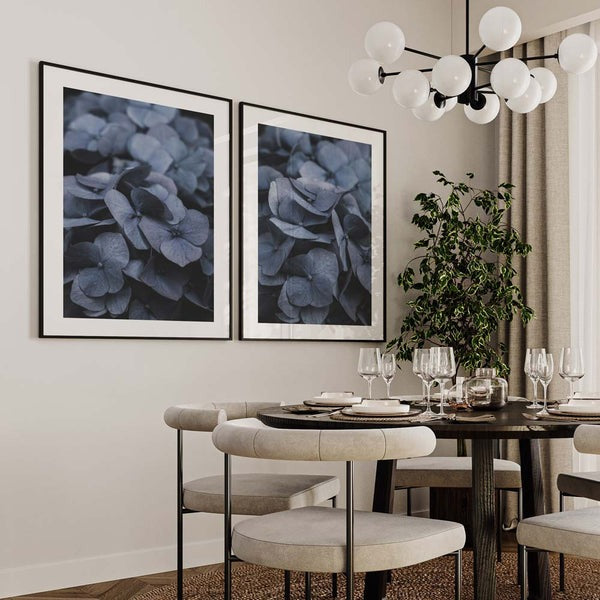
Botanical imagery plays an important role in this process. Even when a room cannot be filled with plants or overlook a garden, artwork can create a visual connection to the natural world. The result is often subtle, yet meaningful. A room feels calmer, warmer, and more welcoming.
Why Flowers Feel Personal
Unlike many decorative subjects, flowers carry emotional significance that extends far beyond their appearance.
Almost everyone associates flowers with meaningful moments in life. They appear at celebrations, accompany important milestones, and often become part of family traditions and personal memories. Flowers are present during some of life's happiest occasions, which helps explain why they evoke such positive emotional responses.
Because of these associations, floral imagery often feels familiar even when the specific flower itself is unfamiliar.
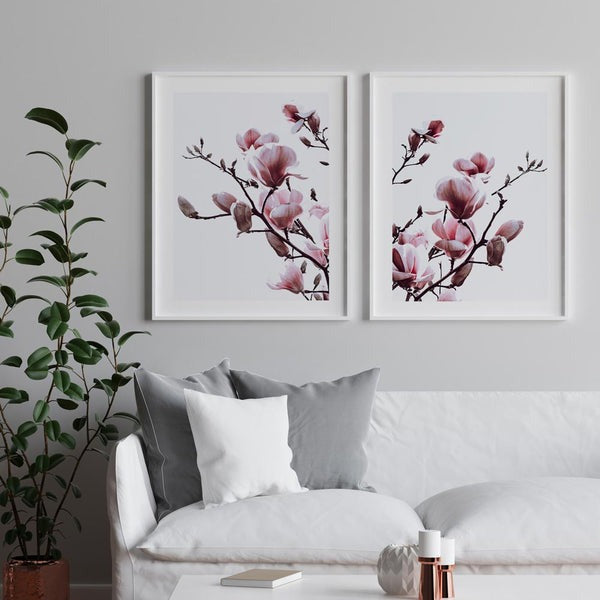
A piece such as Pink Magnolia Art Print illustrates this beautifully. The artwork does not rely on dramatic colours or complex symbolism to create an emotional connection. Instead, it draws upon a universal appreciation for natural beauty and the quiet elegance associated with blooming flowers.
This familiarity allows botanical artwork to feel approachable in a way that many other decorative styles do not.
The Difference Between Decoration and Atmosphere
One of the most overlooked aspects of interior design is the distinction between decoration and atmosphere.
Decoration concerns how a room looks.
Atmosphere concerns how a room feels.
The most successful interiors achieve both.
Flowers contribute to atmosphere because they introduce qualities that many modern environments lack. Their shapes are organic rather than rigid. Their growth is unpredictable rather than manufactured. Their beauty feels effortless rather than engineered.
These characteristics help soften spaces dominated by straight lines, hard surfaces, and structured layouts.
This is particularly important in contemporary homes, where minimalist design can sometimes create environments that feel visually impressive but emotionally distant. Botanical subjects introduce warmth without creating clutter, making them uniquely effective in modern interiors.
Why Organic Forms Reduce Visual Fatigue
There is also a psychological reason botanical imagery remains so appealing.
Human beings process natural forms differently from artificial ones. Researchers studying environmental psychology have found that organic patterns tend to create less visual strain than highly structured environments. Natural shapes are complex enough to remain interesting but predictable enough to feel comfortable.
Flowers are a perfect example.
Every bloom contains variation, texture, and detail, yet nothing feels chaotic. The eye moves naturally through the composition, creating an experience that is engaging without becoming exhausting.
This may help explain why floral wall art remains such a popular choice for bedrooms, living spaces, and reading areas. Rather than competing for attention, it encourages a slower and more relaxed form of engagement.
In a world increasingly filled with information and distraction, that quality has become surprisingly valuable.
Why Botanical Art Works Across Every Design Style
Many decorative trends succeed within a specific design movement before gradually losing relevance.
Botanical imagery is different.
Flowers have appeared in classical paintings, Victorian interiors, contemporary photography, and modern design because they are not tied to a particular era. Their appeal comes from the subject itself rather than the style used to represent it.
This adaptability allows botanical artwork to feel equally comfortable within traditional homes, contemporary apartments, and minimalist interiors.
For example, Monstera Art Print demonstrates how natural subjects can feel distinctly modern. The bold structure of the leaf complements contemporary design aesthetics while maintaining a strong connection to nature. The result is artwork that feels current without relying on trends.
This balance between timelessness and modernity helps explain why botanical subjects continue to evolve without becoming outdated.
Making Spaces Feel More Human
The most memorable homes are rarely defined by luxury alone.
What people remember is how a space made them feel.
Comfortable.
Welcomed.
Relaxed.
Connected.
Nature has always played an important role in creating those feelings because it introduces qualities that resonate on a deeply human level. Flowers, in particular, remind us of growth, beauty, and the changing rhythms of life. They bring softness to structured environments and personality to spaces that might otherwise feel impersonal.
This is one reason the Florals Collection continues to resonate with homeowners seeking meaningful art. Whether displayed as flower canvas wall art, incorporated into a gallery arrangement, or selected as a statement piece within a room, botanical subjects create a connection that extends beyond aesthetics.
The best canvas prints do more than fill an empty wall. They contribute to the atmosphere of a home and help shape the experience of living within it.
Perhaps that is the quiet power of flowers.
They rarely demand attention.
Yet their presence changes the character of a room in ways people immediately feel, even when they cannot quite explain why.

Leave a comment
This site is protected by hCaptcha and the hCaptcha Privacy Policy and Terms of Service apply.