

Why Vertical Wall Art Makes a Room Feel Taller: The Psychology Behind Beautiful Spaces
Have you ever walked into a room that felt unexpectedly open, elegant, and calming, even though it wasn't particularly large? Then, on another day, entered a much bigger room that somehow felt cramped or uninspiring? The difference often has less to do with square footage and more to do with visual perception. Great interior design doesn't simply fill a space—it guides the way we experience it.
One of the most overlooked tools designers use to influence perception is vertical wall art. While furniture, paint colours, and lighting receive most of the attention, the orientation of artwork quietly shapes how our eyes move through a room. Rather than drawing attention to the width of a wall, vertical artwork encourages the eye to travel upward, creating a subtle but powerful illusion of height.
This isn't just a decorating trend. It's a principle rooted in environmental psychology, architecture, and the way the human brain naturally interprets visual information. Understanding why it works can help you make smarter design choices, whether you're styling a spacious home, a compact apartment, or simply trying to make an awkward corner feel more intentional.
Your Brain Sees Direction Before It Sees Decoration
Long before we appreciate the colours in a painting or the details of a photograph, our brains process its basic structure. Psychologists refer to this as pre-attentive processing—the brain's ability to recognise patterns, shapes, and directions almost instantly.
Vertical lines have a unique effect because they naturally encourage upward eye movement. Instead of allowing our attention to stop at furniture height, they extend our visual journey toward the ceiling. That movement subtly changes how we perceive the room itself.
It's the same reason why tall trees make forests feel majestic, why cathedral interiors feel awe-inspiring, and why skyscrapers appear even taller than their measurements suggest. Vertical forms create a sense of aspiration and openness because our eyes instinctively follow them.
When you introduce vertical art for wall spaces, you're borrowing the same principle on a much smaller scale. The artwork becomes part of the room's architecture, helping the walls feel taller without altering a single brick.
The Illusion of Height Begins Long Before You Notice the Ceiling
Many homeowners believe that making a room feel larger requires structural changes—raising ceilings, knocking down walls, or investing in expensive renovations. In reality, perception often matters more than dimensions.
Interior designers understand that people rarely experience a room by measuring it. They experience it emotionally.
A room that encourages the eye to travel upward feels lighter and more spacious. A room where every visual element runs horizontally can sometimes feel grounded to the point of appearing shorter than it really is.
This is why designers frequently combine floor-to-ceiling curtains, tall shelving, indoor plants, and long vertical wall art. Together, these elements create a continuous visual rhythm that stretches the space vertically. Even homes with completely average ceiling heights begin to feel more refined because the eye never settles in one place for long.
The ceiling hasn't changed—but your perception of it has.
Why Apartments Often Benefit the Most
Small apartments present a unique design challenge. Every piece of furniture competes for attention, every wall has multiple purposes, and every decorating decision carries more visual weight than it would in a larger home.
Ironically, many people make compact rooms feel even smaller by choosing artwork that is too wide or too small.
A large horizontal piece naturally emphasises the limited width of a room. An undersized frame, meanwhile, draws attention to the empty wall surrounding it. Neither solution helps the room breathe.
Vertical art offers a different approach. Rather than expanding the room sideways, it redirects attention upward, encouraging the brain to focus on height instead of floor area. The effect isn't dramatic enough to fool someone into believing the room has physically grown, but it is significant enough to change how the space feels.
This explains why portrait-oriented artwork has become increasingly popular in modern apartments, studios, and urban homes where making every square metre feel more comfortable is a priority.
The Walls Most People Ignore Can Become the Most Beautiful
Every home has walls that seem difficult to decorate. The narrow space beside a window. The strip between two doorways. The area next to built-in shelving. The slim section beside a fireplace.
Many homeowners simply leave these spaces empty because traditional landscape artwork feels too wide.
Professional designers think differently.
Instead of viewing these narrow walls as limitations, they treat them as opportunities to introduce rhythm and movement. A carefully chosen piece of large vertical wall art mirrors the proportions of the wall itself, making the architecture feel intentional rather than incomplete.
What was once an awkward gap suddenly becomes one of the room's strongest visual moments.
This is one reason our Vertical Wall Art collection focuses on portrait compositions that complement architectural spaces many homeowners struggle to style. Rather than forcing artwork onto a wall, the orientation works with the wall's natural proportions.
Why Travel Photography Works So Well in Vertical Formats
Not every subject benefits equally from a vertical composition. Some destinations naturally lend themselves to portrait orientation because their beauty is defined by elevation rather than width.
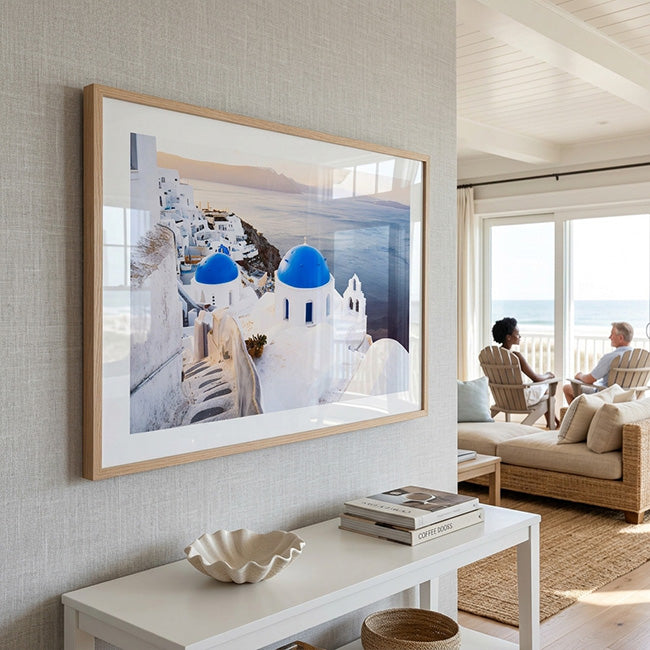
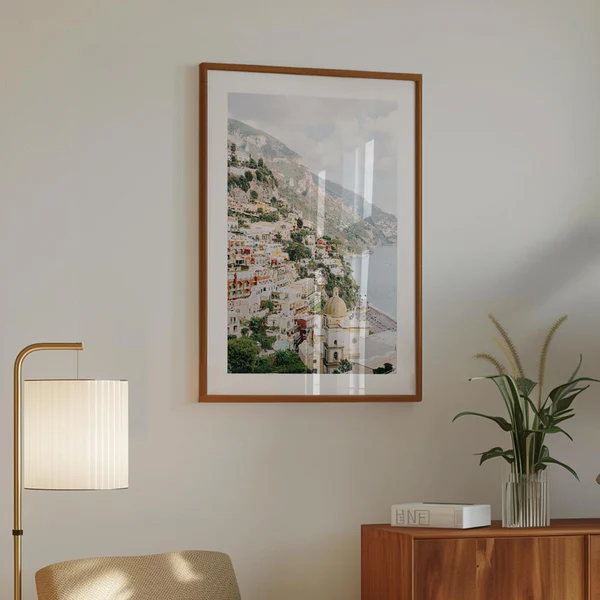
Think about the dramatic cliffs of Italy's Amalfi Coast. Your eyes begin at the sea before climbing through layers of colourful buildings stacked into the mountainside. The journey itself is vertical.
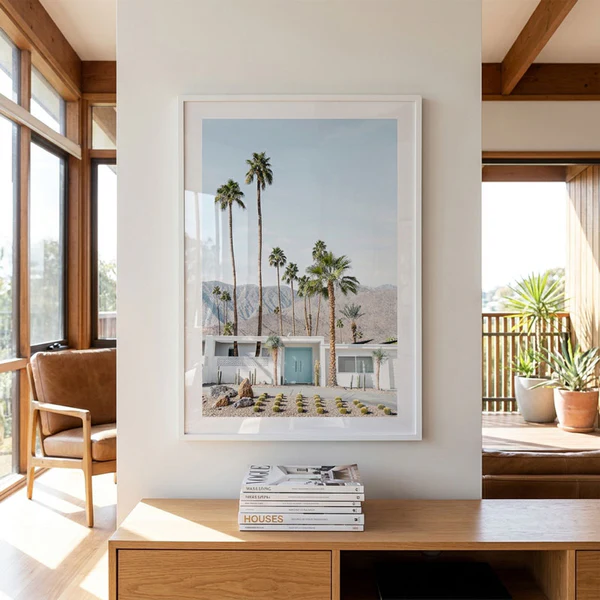
It's the same story with palm-lined streets, towering coastal cliffs, mountain villages, and lighthouse viewpoints. These scenes invite your eyes to move upward, reinforcing the same psychological effect created by the artwork's orientation.
That's why destinations featured throughout our Italy Wall Art collection feel particularly immersive in portrait format. An Amalfi Coast Print, for example, doesn't simply capture a famous location—it recreates the upward movement that makes the landscape unforgettable.
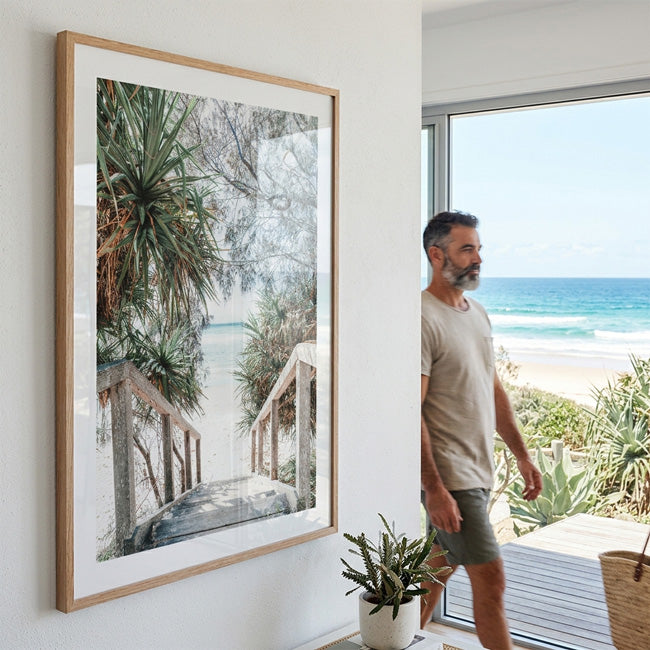
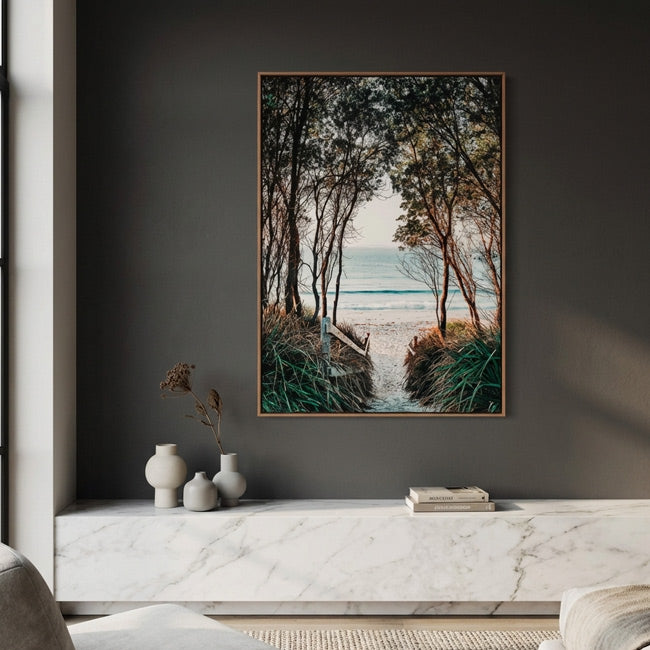
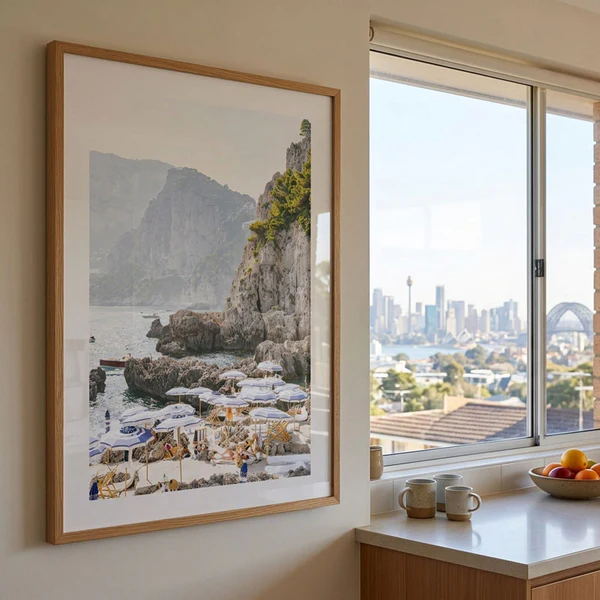
Likewise, coastal photography such as our Bondi Beach Print introduces another type of vertical rhythm. Palm trees rising into open skies, beach pathways leading toward the horizon, and layered ocean perspectives naturally encourage the eye to explore the full height of the composition.
The subject and the orientation work together, making the artwork feel purposeful rather than merely decorative.
Bigger Isn't Better—Proportion Is
One of the most common decorating mistakes is assuming artwork should simply fill an empty wall.
Experienced designers think in terms of proportion instead.
A piece that's too small can leave a wall feeling disconnected, while one that's excessively large can dominate the room and compete with its architecture. The goal isn't to occupy every centimetre but to create visual balance.
This is where vertical wall art excels. Because the composition naturally follows the proportions of many architectural features—doors, windows, fireplaces, and tall shelving—it often feels harmonious without overwhelming the room.
The artwork doesn't demand attention. It quietly guides it.
That subtle distinction is what separates thoughtfully designed interiors from spaces that simply contain beautiful objects.
Designing for How a Room Feels
The best interiors are rarely remembered because of a single expensive piece of furniture. They're remembered because of how they make people feel.
A room that feels calm encourages longer conversations. A room that feels open invites relaxation. A room with thoughtful visual flow creates comfort before we consciously understand why.
This is the quiet power of vertical artwork. It doesn't rely on bold colours or oversized statements to transform a space. Instead, it works with the natural habits of human perception, encouraging the eye to travel upward, softening the boundaries of the room, and creating an atmosphere that feels balanced rather than crowded.
When choosing art for your home, it's worth thinking beyond the image itself. Consider how its shape interacts with your architecture, how it influences movement, and how it changes the emotional experience of the room. Whether you're styling a narrow hallway, a compact apartment, or a spacious living area, the right vertical art can do far more than decorate a wall—it can reshape the way the entire space is experienced.

Leave a comment
This site is protected by hCaptcha and the hCaptcha Privacy Policy and Terms of Service apply.