

How Vertical Art Creates a Luxury Hotel Feeling at Home
There is a reason people remember a luxury hotel long after they've forgotten the thread count of the sheets or the brand of the furniture. What stays with them is a feeling. The room feels calm, spacious and thoughtfully composed from the moment they walk through the door. Nothing appears excessive, yet everything seems intentional. This impression isn't created simply by expensive materials or designer furniture. In fact, many boutique hotels achieve a premium atmosphere with relatively simple interiors because they understand one important principle: luxury is largely a matter of perception. The way light moves through a room, the balance between furniture and empty space, and even the direction your eyes naturally travel all influence whether an interior feels ordinary or exceptional. Artwork is one of the quietest but most effective tools in shaping that experience, and it's no coincidence that vertical wall art appears repeatedly throughout many of the world's finest hotels.
Unlike decorative accessories that compete for attention, portrait-oriented artwork works with the architecture of a room. It introduces height, rhythm and elegance without demanding to be the centre of attention. Whether displayed beside a bed, in a hotel corridor or behind a reception desk, its role extends beyond decoration. It influences how guests perceive the proportions of the room itself, making spaces feel taller, calmer and more refined. These principles are not reserved for five-star resorts. They're based on human psychology, which means they can be applied just as successfully in an apartment, townhouse or family home.
Luxury Is Built on Intention, Not Expense
One of the biggest misconceptions about luxury interiors is that they require a large budget. While premium materials certainly contribute to the overall experience, they are rarely what defines a sophisticated space. Interior designers consistently emphasise composition before decoration because the relationship between objects matters far more than the objects themselves.
This explains why some expensive homes can still feel visually chaotic. Artwork is often purchased independently, furniture follows changing trends, and decorative pieces are added over time without a clear relationship to one another. The result is a room where every object competes for attention. Luxury hotels avoid this entirely. Every chair, lamp, table and artwork is selected because it contributes to a unified visual language. Nothing feels isolated because every element supports the architecture around it.
This is precisely where vertical artwork becomes so valuable. Rather than interrupting the room, portrait-oriented pieces naturally echo architectural features that already exist, including doors, windows, full-length curtains and tall shelving. Instead of creating another horizontal line within the room, they reinforce height and rhythm. The artwork becomes part of the architecture itself, which is one of the defining characteristics of professionally designed interiors.
Why Premium Hotels Encourage Your Eyes to Look Up
Designers understand that people rarely analyse a room consciously. Instead, they react emotionally to what their eyes experience in the first few seconds. If visual attention immediately becomes trapped by heavy furniture or low horizontal lines, the room can feel smaller than it actually is. Conversely, when the eye is encouraged to move upward, the entire space begins to feel lighter and more expansive.
Luxury hotels deliberately create this upward movement through repeated vertical elements. Floor-to-ceiling curtains, elegant wall panelling, slender lighting fixtures and carefully positioned vertical wall art all work together to guide the eye toward the ceiling. This visual journey subtly changes how the brain interprets the room's dimensions. Although the physical measurements remain unchanged, guests perceive the environment as more open because their attention is no longer concentrated at eye level.
This explains why hotel rooms that are similar in size to an average bedroom often feel noticeably larger. The difference isn't square metres—it's visual direction. Rather than allowing furniture to dominate the room, designers distribute attention throughout the full height of the space. Portrait-oriented artwork plays an important role in achieving this balance because it extends the room visually without introducing clutter.
Less Decoration Often Feels More Luxurious
Another lesson worth borrowing from hospitality design is the confidence to leave space unfilled. Many homeowners assume that every empty wall needs artwork and every surface needs decoration. Ironically, this instinct often has the opposite effect, making interiors feel busy instead of refined.
Luxury hotels rarely overwhelm guests with decorative objects because visual rest is just as important as visual interest. A carefully positioned statement piece surrounded by generous negative space naturally attracts more attention than a wall crowded with unrelated frames. The artwork has room to breathe, allowing guests to appreciate both the image and the surrounding architecture.
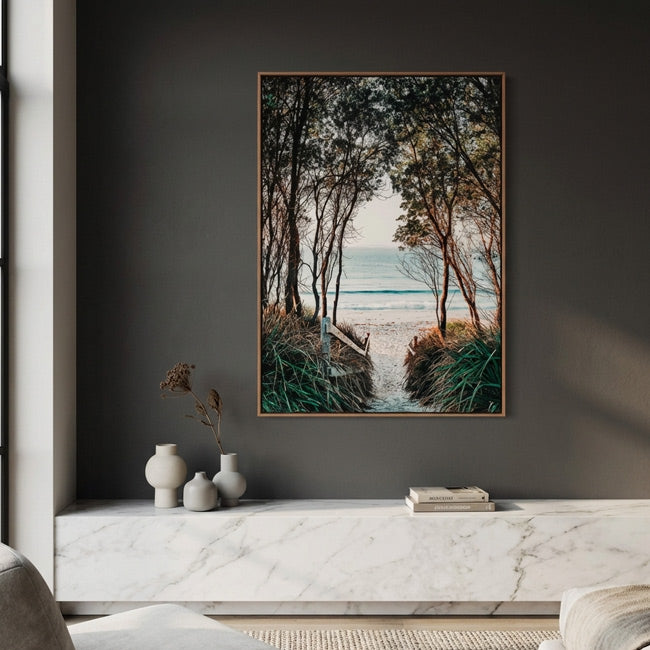
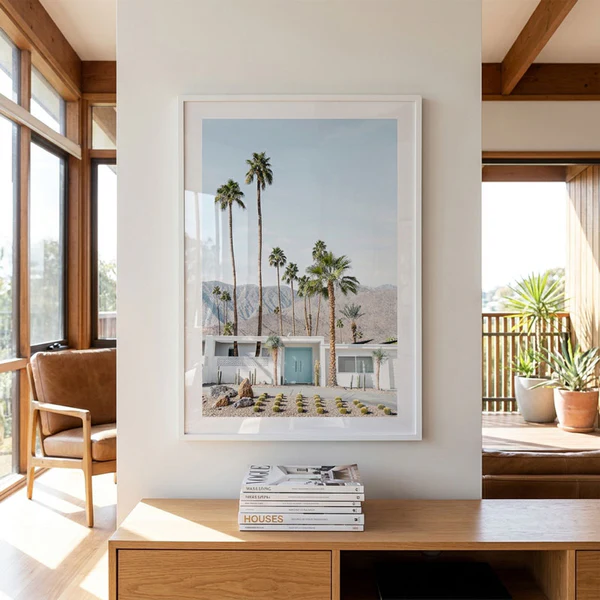
This is why large vertical wall art often creates a stronger impression than several smaller pieces arranged without purpose. A single portrait-oriented print placed beside a lounge chair, fireplace or console table establishes a clear focal point while preserving the openness that luxury interiors are known for. The feeling isn't created by quantity but by confidence—the confidence to let one beautiful piece speak for itself.
The Most Memorable Hotel Interiors Tell a Story
Think about the hotels that leave a lasting impression after a holiday. Chances are you remember more than comfortable beds or beautiful bathrooms. You probably remember the atmosphere created by the artwork, the colours and the destinations they celebrated. Great hospitality design understands that artwork should contribute to the identity of a place rather than simply filling blank walls.
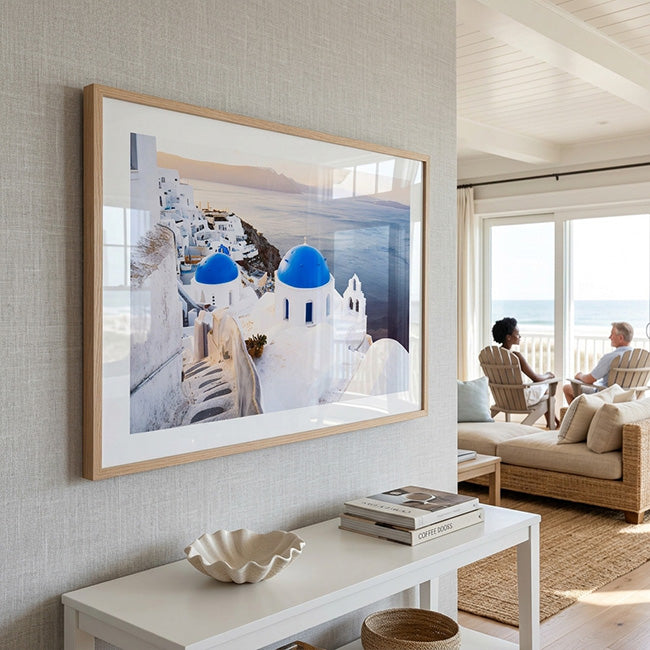
Travel photography is particularly effective because it connects people with experiences they aspire to revisit. Mediterranean villages, dramatic coastlines and vibrant city streets evoke emotion long before anyone studies the technical quality of the image. They remind us of freedom, discovery and moments that felt larger than everyday life.
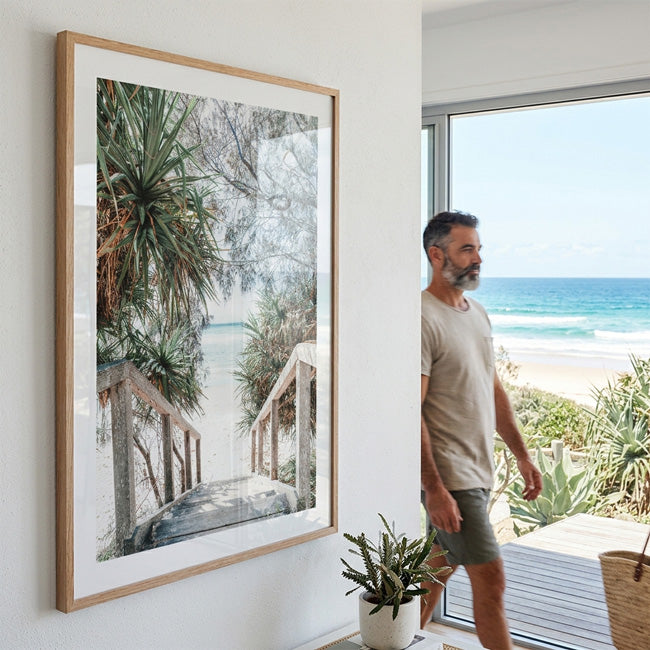
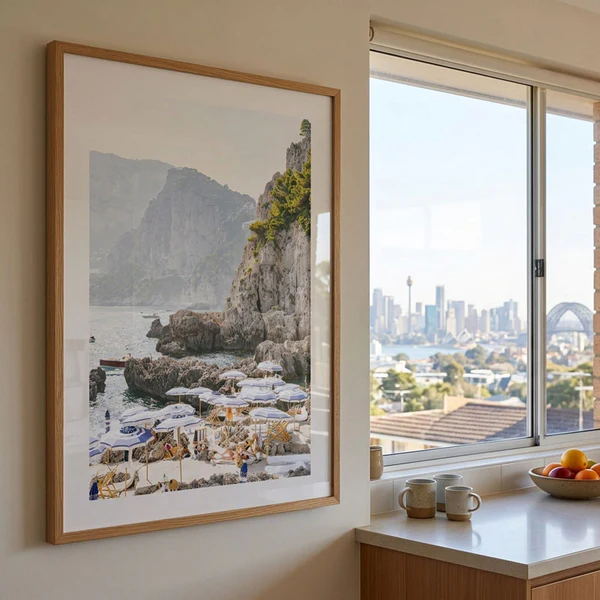
Many of these destinations naturally suit portrait orientation because their beauty unfolds vertically. The villages of the Amalfi Coast climb steep cliffs above the sea, drawing the eye upward through colourful terraces and historic architecture. An Amalfi Coast Print captures this movement beautifully, making it feel perfectly at home within a piece of vertical artwork. Likewise, Australia's famous coastline offers another excellent example. A Bondi Beach Print combines towering palm trees, open skies and layered coastal scenery, allowing the composition to reinforce the same upward visual flow that helps luxury interiors feel spacious and sophisticated.
Rather than functioning as decoration alone, these pieces introduce narrative into a room. They encourage conversation, trigger memories of travel and create emotional depth that extends well beyond aesthetics.
Designing a Home That Feels Like a Retreat
Perhaps the greatest lesson luxury hotels teach us is that beautiful interiors are designed around how people feel rather than what people own. Comfort comes from balance. Sophistication comes from restraint. Elegance comes from proportion. Every successful design decision supports these principles, and artwork is no exception.
A thoughtfully curated Vertical Wall Art collection allows homeowners to apply many of the same ideas without altering the architecture of their homes. Portrait-oriented pieces introduce height where rooms feel compressed, bring elegance to narrow walls that are often overlooked, and create a visual rhythm that encourages the eye to move naturally through a space. When paired with destinations that already possess strong architectural character—such as those found throughout our Italy Wall Art collection—the effect becomes even more compelling because the subject matter reinforces the same sense of elevation and openness created by the artwork itself.
Luxury has never been about owning the most expensive objects in a room. It has always been about creating an environment that feels calm, intentional and memorable. The homes that leave the strongest impression aren't necessarily the largest or the most extravagant. They're the ones where every design decision works together, quietly shaping the experience of everyone who walks through the door.

Leave a comment
This site is protected by hCaptcha and the hCaptcha Privacy Policy and Terms of Service apply.