

Why We're Drawn to the Ocean Even When We're Miles Away From It
Imagine standing at the edge of the coastline.
There is no notification demanding your attention. No traffic noise. No crowded schedule waiting for you tomorrow morning. Just the steady rhythm of waves meeting the shore and an endless horizon stretching beyond sight.
For many people, simply imagining this scene creates a sense of calm.
What's fascinating is that this response isn't unique. It happens across cultures, generations, and lifestyles. Whether someone lives in a bustling city, a rural town, or hundreds of kilometres from the nearest beach, the ocean holds a remarkably consistent emotional pull.
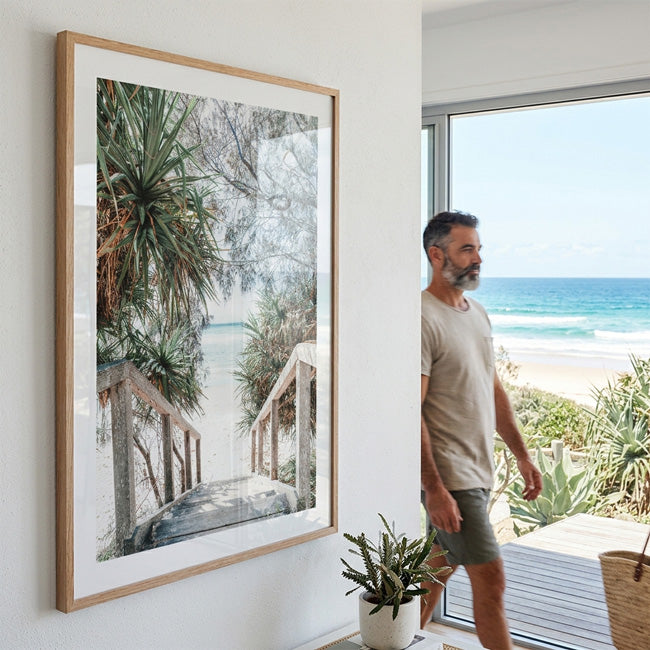
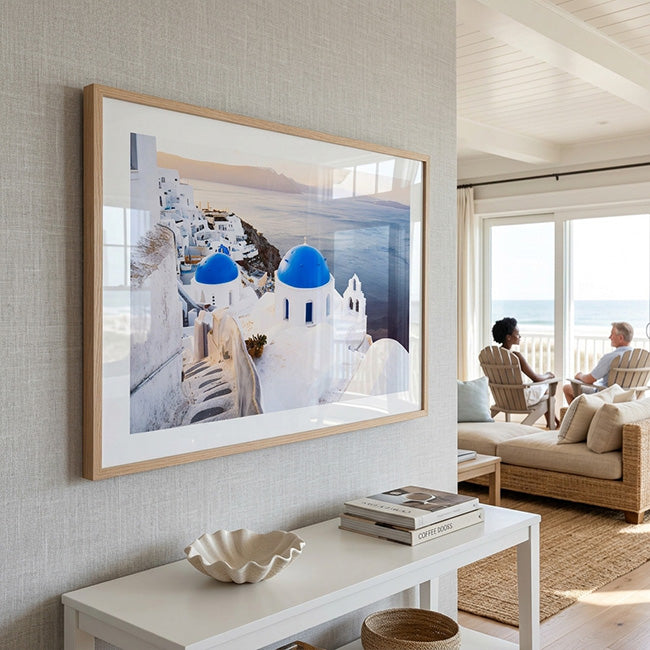
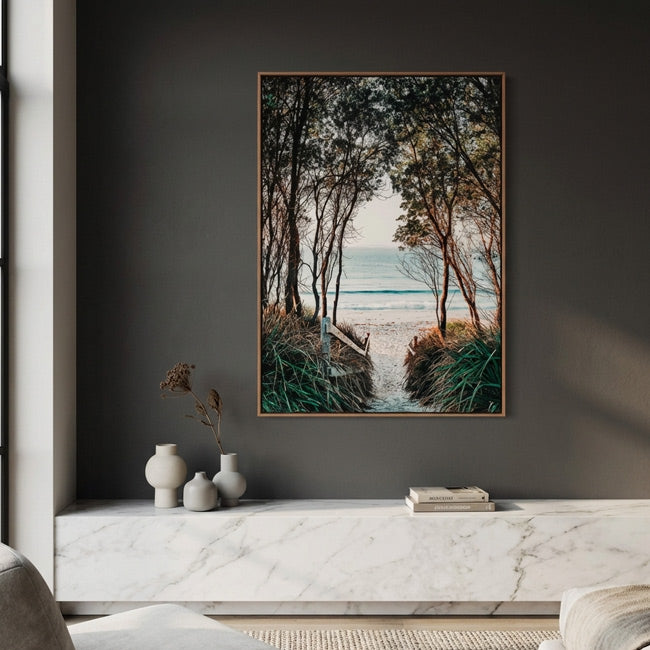
We travel long distances to see it. We choose holiday destinations near it. We pay premiums for homes overlooking it. And even when it isn't physically present, we bring it into our lives through photographs, memories, and coastal wall art.
The question is why.
Why does the ocean continue to captivate us, even when we're nowhere near it?
The answer lies in a fascinating combination of psychology, evolution, memory, and our enduring connection to the natural world.
Our Relationship With Water Is Older Than We Realise
Long before cities existed, water shaped human survival.
For early humans, access to water meant life itself. Rivers, lakes, and coastlines provided food, transportation, safety, and opportunity. Communities formed around water because water made growth possible.
Over thousands of years, our brains became remarkably good at recognising environments that supported wellbeing. While modern life has changed dramatically, many of those instincts remain surprisingly intact.
Researchers often refer to this as an evolutionary preference for environments that signal safety and abundance. Open views allow us to observe our surroundings. Natural landscapes reduce cognitive strain. Access to water historically indicated security and survival.
In simple terms, the human brain has spent thousands of years learning that water is a good thing.
This may help explain why so many people feel an immediate sense of comfort when standing beside the ocean, even if they cannot fully articulate why.
The Ocean Gives Our Minds Something Rare: Space
Modern life is full of visual demands.
Screens compete for attention. Advertisements fight for visibility. Cities surround us with movement, colour, and noise. Even our homes often become extensions of busy schedules and endless notifications.
The ocean offers the opposite experience.
Instead of asking for attention, it creates space.
A coastline is visually simple. The horizon is uninterrupted. The movement of waves follows predictable patterns. There is enough variation to remain interesting, yet enough consistency to feel calming.
Psychologists sometimes describe this as "soft fascination"—a state where attention is gently engaged without becoming overwhelmed. It allows the mind to recover from mental fatigue rather than contribute to it.
This is one reason ocean views are often associated with relaxation and clarity. The experience isn't simply beautiful; it changes how our attention functions.
Even a photograph can evoke a small part of that feeling.
Why Coastal Images Feel Different From Other Artwork
Not all landscapes create the same response.
A busy city scene may feel exciting. An abstract composition may feel intellectually stimulating. But coastal imagery often operates on a more emotional level.
It reminds us of freedom.
The ocean has always represented possibility. There is something deeply symbolic about an open horizon that extends beyond what we can see. It encourages reflection. It creates perspective. It reminds us that the world is larger than the immediate concerns occupying our minds.
This is one reason coastal artwork remains so enduringly popular in homes around the world.
People aren't simply responding to the image itself. They are responding to what the image represents.
Adventure.
Calmness.
Escape.
Discovery.
Connection.
These are qualities many people actively seek in their lives, even when they cannot physically visit the coast whenever they wish.
The Power of Memory and Emotional Association
For many people, the ocean is tied to some of life's most positive experiences.
Childhood holidays.
Summer afternoons.
Family gatherings.
Road trips.
Moments of celebration.
Moments of reflection.
Unlike workplaces or daily routines, coastal environments are often associated with periods when people feel most present and connected.
Years later, a single image can unlock those memories.
A familiar shoreline. The colour of the water. The way sunlight reflects across the waves.
These details often carry emotional significance far beyond their visual appearance.
This is why meaningful artwork tends to resonate more deeply than purely decorative pieces. The strongest images remind us of experiences rather than simply filling empty space.
Bringing the Ocean Home
While most people cannot live beside the coastline, they still seek ways to maintain that connection.
This is where photography becomes particularly powerful.
A piece such as Bondi Art Print captures the openness and atmosphere that have made Australia's coastline famous around the world. The image doesn't need dramatic colours or complex composition to be effective. Its strength lies in its authenticity and ability to evoke a sense of place.
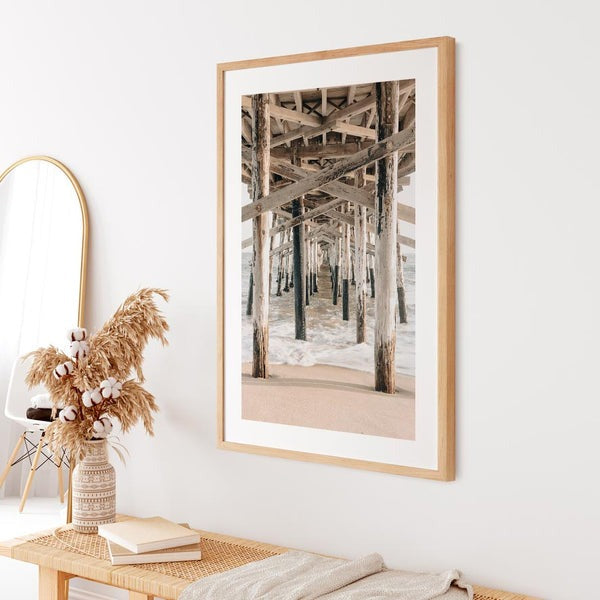
Similarly, Under The Pier Art Print offers a perspective many people would never experience firsthand. By inviting viewers beneath the structure, the image transforms a familiar coastal setting into something unexpected and immersive.
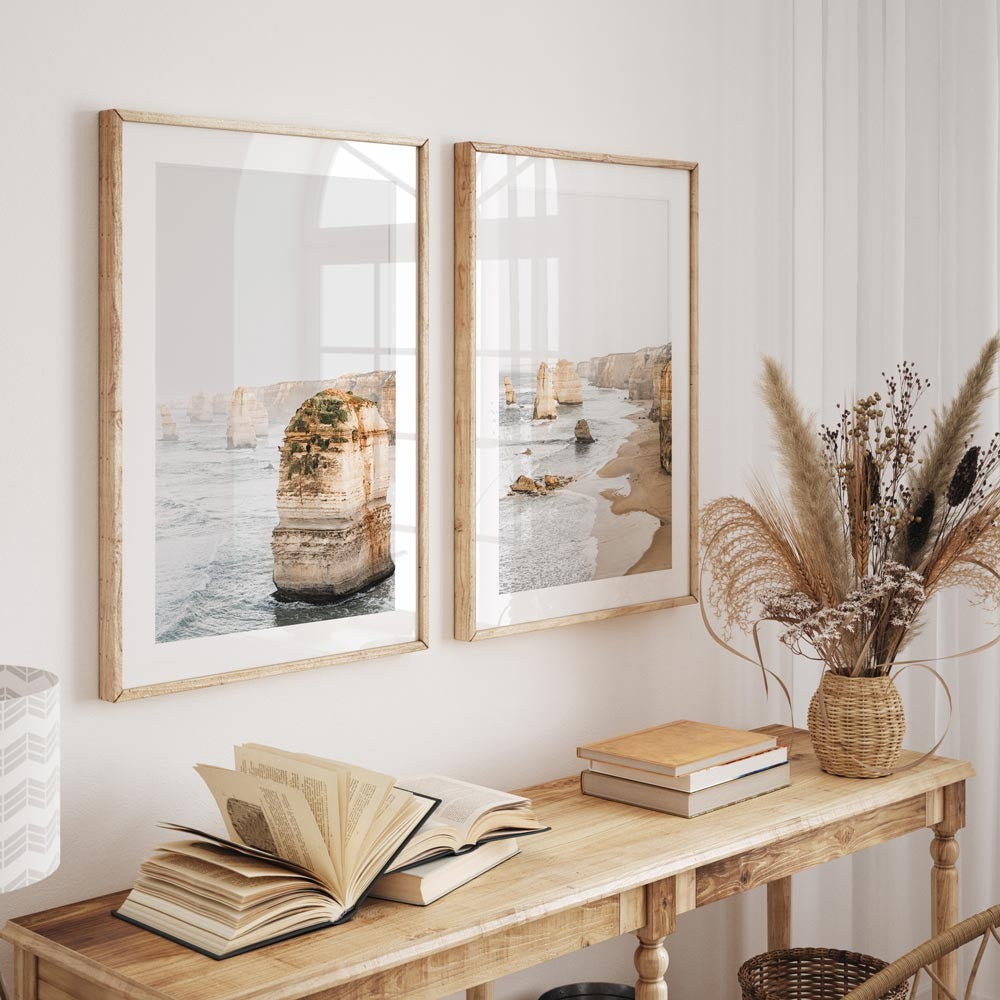
Then there is Sunrise at 12 Apostles Art Print, which captures one of Australia's most iconic coastal landscapes. Beyond its natural beauty, the scene reminds us of the immense scale and power of the natural world—something modern life often causes us to forget.
Together, these works demonstrate why nature art continues to hold such lasting appeal. They offer more than scenery. They offer connection.
The Ocean Effect in Interior Design
Interior design is often discussed in terms of colour palettes, furniture layouts, and decorative trends. While these elements matter, the most memorable spaces usually succeed for a different reason.
They make people feel something.
A room filled with meaningful imagery often creates a stronger emotional response than a perfectly coordinated room lacking character.
This is why homeowners continue to gravitate towards coastal wall art. The imagery introduces a sense of openness and tranquillity that influences the atmosphere of a space. It creates visual breathing room. It softens busy environments. It reminds people of places and experiences that matter to them.
In many ways, coastal imagery functions as a window rather than a decoration. It extends the room beyond its physical boundaries and creates a connection to something larger.
Why We Keep Returning to the Ocean
Perhaps the most remarkable thing about the ocean is that it continues to inspire us no matter how many times we experience it.
The view rarely changes dramatically, yet it never feels repetitive.
The waves repeat endlessly, yet they never seem identical.
The horizon remains constant, yet it continues to spark curiosity.
Few environments possess this combination of familiarity and wonder.
This may be why the ocean occupies such a unique place in human culture, memory, and imagination. It offers both comfort and possibility. It feels timeless while constantly changing.
And perhaps that is why we continue to surround ourselves with it—even when we're miles away.
The best wall art prints Australia collections capture more than coastal scenery. They preserve a feeling that people instinctively understand. A thoughtfully chosen piece of canvas art can serve as a daily reminder of calmness, freedom, and connection to the natural world.
Long after the beach has disappeared from view, that feeling remains.


Leave a comment
This site is protected by hCaptcha and the hCaptcha Privacy Policy and Terms of Service apply.