

Article: What Flower Art Is in Style? Floral Wall Art Trends Worth Knowing
What Flower Art Is in Style? Floral Wall Art Trends Worth Knowing
Flower art has never really gone out of style. What changes is the way we see flowers.
For centuries, artists have painted, drawn and photographed flowers not only because they are beautiful, but because they offer an extraordinary range of shapes, colours, textures and meanings. A flower can be delicate and understated, or architectural and dramatic. It can fill an entire composition or become a tiny detail within a much larger scene.
Today, that variety is showing up in the way people decorate their homes. Traditional botanical illustrations still have their place, but they sit alongside oversized flower photography, Australian native flowers, abstract botanical compositions, muted dried florals and highly detailed close-ups.
So what flower art is actually in style right now?
The answer is less about one particular flower or decorating trend and more about how flowers are being presented. Contemporary floral wall art is becoming larger, simpler and more expressive, with the flower itself often becoming the entire subject rather than something used to fill a decorative arrangement.
Oversized Flower Art Is Making a Statement
One of the strongest directions in modern flower art is scale.
Instead of several small floral pictures scattered across a wall, a single large bloom can become the focal point of an entire room. The effect is particularly striking when the composition is simple: one flower, a restrained background and enough surrounding space for the image to breathe.
Large flower prints work because they create impact without necessarily making a room feel busy. A close-up photograph of petals, for example, can become almost abstract when enlarged. You may recognise the flower immediately, but you also start noticing the shapes, shadows, folds and colour transitions within it.
This is one reason oversized botanical artwork works so well in contemporary interiors. It provides visual detail while keeping the overall composition uncomplicated.
For a room with neutral walls and relatively simple furniture, a large floral print can provide the visual centre without competing with everything else in the space.
Australian Native Flowers Are Bringing Something Different to Floral Art
Flowers such as roses, peonies and tulips have appeared in decorative art for generations. But one of the more distinctive directions in contemporary flower wall art is the growing appreciation for native and less conventional flowers.
Australian natives are particularly interesting because many have naturally sculptural forms.
Banksias, proteas, flowering gums and wattles don't necessarily look like the flowers people traditionally associate with decorative floral artwork. Their unusual shapes, strong silhouettes and earthy colours give them a more architectural character.
This makes them particularly well suited to modern interiors.
Oblong's Botanicals & Florals collection includes a number of these subjects, including wattle, banksia, eucalyptus, protea and gum nuts. The collection is based on original photography by Seus Ku rather than stock imagery, giving the photographs a distinctly contemporary character.
The Red Banksia Flower Art Print, for example, focuses attention on the structure of the flower itself. Instead of presenting the banksia as part of a traditional bouquet, the photograph allows its unusual form to become the artwork.
That is an important difference between contemporary floral art and more conventional floral decoration: the flower doesn't have to look soft or delicate to be beautiful.
Botanical Photography Is Replacing the Traditional Floral Still Life
Botanical art has a long history, particularly in scientific illustration. The Royal Horticultural Society holds tens of thousands of botanical paintings and drawings, reflecting centuries of interest in recording the detail and character of plants.
Today, photography has expanded that tradition in a completely different direction.
A photograph can capture the fine texture of a petal, the translucent quality of a leaf or the intricate structure of a flower at a level of detail that would be difficult to reproduce by hand.
The result is botanical artwork that feels less like a traditional illustration and more like contemporary fine art.
The Royal Horticultural Society's botanical art collection is a useful reminder that botanical art has always existed somewhere between scientific observation and visual beauty. Contemporary botanical photography simply approaches that relationship through a different medium.
For interiors, this opens up considerably more possibilities. A botanical print doesn't have to look vintage, rustic or traditional. It can be minimal, dramatic, monochromatic, highly detailed or almost abstract.
Close-Up Flower Photography Is Turning Flowers Into Abstract Art
Perhaps the most interesting development in flower art is what happens when you get closer.
At a certain scale, you stop looking at a flower simply as a flower.
You begin seeing curves, layers, shadows and colour fields.
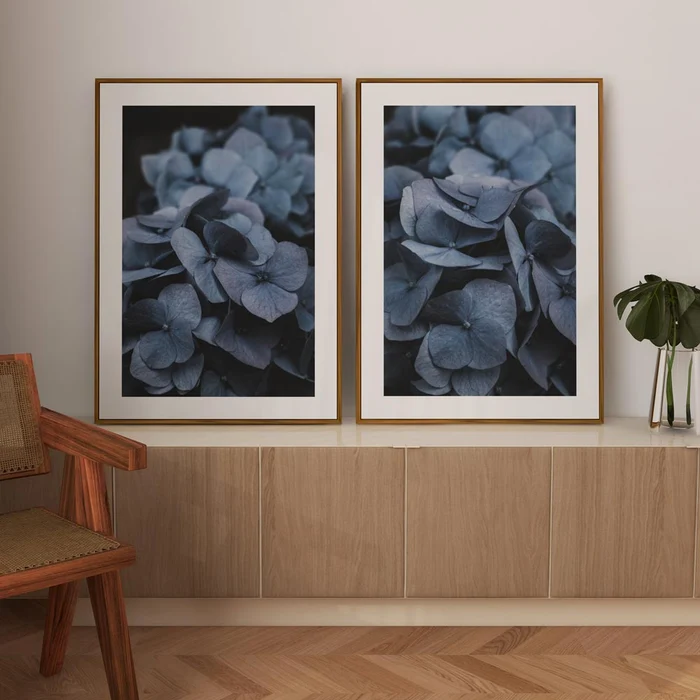
A close-up of a hydrangea, for example, can become a composition of overlapping petals rather than a conventional picture of a plant. This is why floral photography can work particularly well in modern homes: it gives you the organic qualities of nature without requiring the artwork to look traditionally botanical.
Oblong's Hydrangea I Art Print is an example of this approach. The photograph concentrates on the hydrangea itself, allowing the layered structure of the flower to dominate the composition.
The same principle can be seen across contemporary flower prints. The closer the photographer gets, the less important the idea of a complete flower becomes and the more important shape, texture and colour become.
That gives floral artwork a surprisingly modern quality.
Dried Flowers and Muted Botanical Colours Are Still Popular
Not every contemporary floral print needs to be bright.
There is also a strong place for flowers photographed in softer, more restrained palettes: beige, cream, muted green, dusty pink, brown and off-white.
This style works particularly well in interiors where the artwork needs to add texture and character without introducing a completely new colour scheme.
Dried flowers are naturally suited to this approach because they have already lost some of the vivid colour associated with fresh blooms. What remains is often more about structure, texture and tone.
Proteas are especially effective in this style.
Oblong's Dry Protea I Art Print uses the natural form of the king protea with a restrained neutral palette. It demonstrates why botanical artwork doesn't always need strong colour to command attention.
For someone decorating with warm neutrals, natural timber, stone or soft fabrics, this kind of flower print can add visual interest while remaining part of the existing palette.
Minimal Botanical Compositions Are Easier to Live With
Another reason botanical prints continue to work in modern homes is their ability to be visually detailed without being visually complicated.
A single stem, one flower or a small group of leaves can create a much calmer composition than a dense bouquet.
This is particularly useful in rooms where there is already a lot happening.
A busy kitchen, for example, may benefit from a simple botanical photograph rather than a highly decorative floral composition. The same applies to hallways, home offices and bedrooms where the artwork needs to contribute to the atmosphere without becoming the main event.
Minimal botanical artwork also tends to be easier to combine with other pieces.
A simple flower print can sit alongside abstract art, photography, architectural prints or even black-and-white artwork without necessarily making the collection feel mismatched.
Vintage Botanical Prints Still Have Their Place
While contemporary floral photography has become increasingly popular, traditional botanical prints haven't disappeared.
There is something enduring about the detailed illustrations found in historic botanical books and collections. Their appeal comes partly from the relationship between scientific accuracy and artistic observation.
Institutions such as the RHS and the Metropolitan Museum of Art document the long history of plants and flowers in art, showing that botanical imagery has been used for much more than simple decoration.
The modern interpretation doesn't necessarily involve reproducing an old botanical plate exactly. Instead, many interiors borrow elements of that aesthetic: isolated specimens, generous white space, fine detail and restrained compositions.
The result can feel timeless rather than old-fashioned.
Dark Floral Artwork Is Bringing More Drama to Interiors
Not all flower art needs to feel light and airy.
Dark floral artwork is another direction that can create a completely different atmosphere. Deep greens, shadows, burgundy, black backgrounds and rich, saturated colours can make a flower photograph feel more dramatic and sophisticated.
This style is particularly effective when the rest of the room is relatively restrained.
A dark botanical print can work against a light wall as a strong contrast, or become part of a deeper palette with dark furniture, timber, stone and warm lighting.
The important thing is not to think of floral art as automatically soft or feminine. The flower is simply the subject. The mood comes from the photography, composition, colour and presentation.
That is one of the reasons flower art continues to adapt so easily to changing interior styles.
Framed Flower Art Is Becoming Part of the Architecture
The artwork itself is only one part of the finished look.
How a botanical print is framed can completely change how it sits within a room.
A natural timber frame can reinforce an organic, relaxed feeling. Black can make a detailed botanical photograph feel sharper and more contemporary. White can create a lighter presentation, while metallic finishes can introduce a more decorative quality.
Oblong offers framed floral wall art in several frame finishes, allowing the same photographic artwork to take on a different character depending on the interior around it.
For a large statement piece, the frame can also help visually anchor the artwork to the wall rather than making it feel like a photograph simply placed on top of the room.
This becomes particularly important with oversized flower art, where the relationship between the image, frame and surrounding wall space is part of the overall composition.
Flower Art Doesn't Have to Match Your Room Literally
One of the easiest mistakes when choosing floral wall art is trying to find a flower that exactly matches the colours already in the room.
It can be more effective to look for a relationship rather than an exact match.
If your room contains warm timber and beige upholstery, for example, a neutral protea photograph may complement those tones without repeating them exactly.
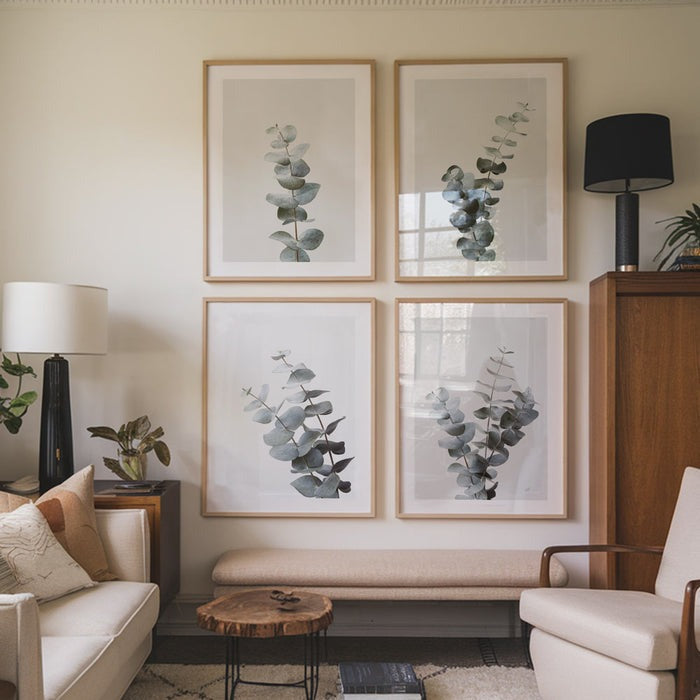
If the room is dominated by greens, eucalyptus or another botanical subject may reinforce the feeling without making everything look coordinated.
And if the rest of the room is fairly neutral, a more colourful flower print can become the element that gives the space personality.
Good flower art doesn't necessarily disappear into a room. Sometimes its job is to give the room something to look at.
One Large Flower Print or Several Smaller Prints?
Both approaches can work, but they create very different results.
A single large flower print tends to feel more deliberate and architectural. It can work particularly well above a sofa, bed, sideboard or large console where there is enough wall space for the artwork to breathe.
Several smaller botanical prints create a more collected feeling. This can be especially effective when the images share a visual relationship but aren't identical.
A set of three protea photographs, for example, can create continuity without looking like one oversized image. Oblong's Set of 3 Dry Protea Art Prints is designed around this idea, with related botanical photographs that can be displayed together.
The choice ultimately depends on the room.
If the wall already has strong architectural features or the furniture is substantial, one statement piece may be enough. If the wall is long and relatively empty, a small collection of botanical prints can create a more balanced arrangement.
The Best Flower Art Trends Are the Ones That Feel Timeless
Trends can be useful when you're trying to understand what is changing, but the best floral artwork doesn't necessarily look fashionable for only one season.
Flowers have an advantage that many decorative subjects don't: they are already timeless.
What changes is the interpretation.
A hydrangea can be photographed as a traditional garden subject, a scientific specimen, an abstract composition or a dramatic close-up. A protea can feel rustic, contemporary or almost sculptural depending on how it is photographed. Eucalyptus can become a subtle botanical detail or the main subject of a large wall.
That flexibility is what keeps flower art relevant.
The current movement toward larger compositions, native flowers, botanical photography, restrained palettes and more sculptural subjects isn't really about abandoning traditional floral art. It is about looking at flowers differently.
Choosing Flower Art for Your Own Home
If you're choosing floral wall art today, start with the room rather than the trend.
Look at the amount of wall space you have, the colours already present and the visual weight of your furniture. Then think about what you want the artwork to contribute.
If the room needs a focal point, consider an oversized flower photograph.
If you want something quieter, look at neutral botanical prints or minimal compositions.
If you want character, Australian native flowers such as banksia, protea and wattle offer something less expected than conventional floral subjects.
If colour is missing from the room, a vivid bloom can provide it.
And if you're looking for something that will remain relevant beyond the latest decorating trend, botanical photography is difficult to go wrong with because the subject itself has already stood the test of time.
Oblong's Botanicals & Florals collection brings many of these approaches together, from hydrangeas and magnolias to Australian natives, eucalyptus, water lilies and proteas. Every piece is original photography by Seus Ku, giving the collection a consistent photographic character while allowing each flower to tell a very different visual story.
So, What Flower Art Is Actually in Style?
The short answer is: flower art that feels intentional.
Oversized blooms are making an impact. Australian native flowers are bringing stronger shapes and more distinctive character into interiors. Botanical photography is offering a contemporary alternative to traditional illustration. Neutral and dried palettes are creating quieter rooms, while darker floral compositions are adding drama.
But underneath all of these trends is the same idea.
People are becoming less interested in floral artwork simply because it contains flowers. They are looking for photographs and compositions that make them stop and look at the flower differently.
That might mean seeing the unusual geometry of a banksia, the layered petals of a hydrangea, the sculptural shape of a protea or the delicate structure of eucalyptus leaves.
And perhaps that is why flower art continues to work so well on the wall.
The flower itself may be familiar. The way we choose to see it doesn't have to be.

Leave a comment
This site is protected by hCaptcha and the hCaptcha Privacy Policy and Terms of Service apply.